
A Very Brief History of Marketing Psychology: From Mind Tricks to Microtargeting
Written By: Dentro Financial
April 1, 2026
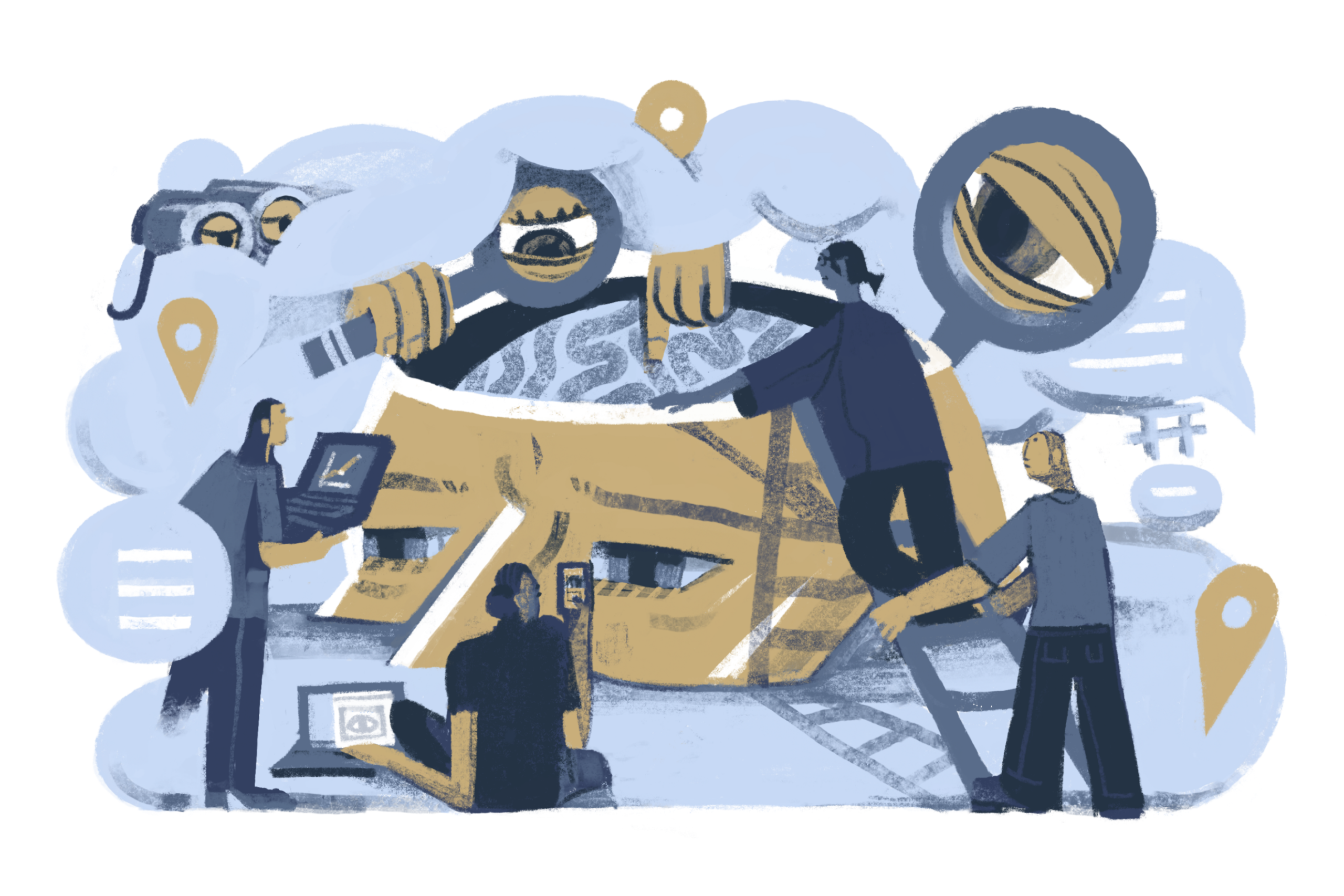
Since the 1800s, scholars and businesspeople have been fascinated by the ways advertising influences consumer behaviour. Over the past century, insights from psychology, economics, and neuroscience have transformed not only how products are sold but how consumers think. In this article, we will briefly explore the rich history of marketing psychology and its ongoing influence on consumer behaviour by taking a glimpse into its evolution through pivotal eras and key figures.
The Rational Beginnings: Advertising as Information
In the 19th century, advertising followed what historians and economists now refer to as the rational model. Rooted in classical economic theory, this model assumes that consumers make logical decisions to maximize their utility. Under this view, people were considered sceptical, cautious, and hard to persuade against their better judgment. Therefore, reasonable prices, product utility, and availability were the main selling points. As a result, advertisements were factual and straightforward, designed primarily to inform the public that a new product existed and explain its intended purpose, aligning with the idea that the consumer is a rational agent: cautious, sceptical, and pragmatic.
Advertising Meets Psychology
By the early 20th century, a new perspective took hold. Influenced by emerging schools of psychology, especially psychoanalysis and behaviourism, scholars and businesses began to think of consumers as irrational. It became increasingly accepted that people are deeply influenced by their emotions, unconscious motives, and social conditioning—all of which can be manipulated[1].
More and more psychologists began formally studying the influence of advertising on consumers. Wheeler Scripture (1864 – 1943) proposed several psychological “laws” relating to advertising, while Harlow Gale (1862 – 1945) conducted some of the first empirical studies on how advertising affects attention and memory. He even used surveys to objectively measure their effectiveness. Around the same time, Walter Dill Scott published “The Theory of Advertising” (1903) and “The Psychology of Advertising” (1908), arguing that people respond to advertising not with reason but with emotion and habit. His work emphasized the role of involuntary attention, suggestion, and repetition in shaping consumer behaviour.[2]
Edward Bernays and the Power of Persuasion: The 1920s
Among the most provocative figures in marketing history was Edward Bernays, who brought psychoanalytic theory directly to advertisement. Bernays’ was the nephew of one of the most influential thinkers of the time, Sigmund Freud. Freud’s theories emphasized that the unconscious mind and hidden desires shape human behaviour, and Bernays applied these ideas directly to advertising in profound and controversial ways. In his 1928 book Propaganda, Bernays argued that advertisement could serve as a tool for mass psychological influence. Inspired by his uncle, he believed that by appealing to the unconscious mind, people could be made to want things they don’t really need.
Bernays’ most famous campaign, The Torches of Freedom, is a masterclass in psychological manipulation. At the time, women smoking in public was frowned upon due to prevailing gender and cultural norms; however, with the rise of the women’s movement, Bernays saw this as an epic opportunity. The American Tobacco Company was seeking ways to boost its sales and identified women as a lucrative new market. When they hired Bernays, he staged a publicity stunt during New York’s Easter Parade, recruiting women to march in the parade and light up cigarettes in a defiant show of their liberation. The campaign cleverly aligned cigarettes with women’s empowerment and the fight for freedom. Tobacco companies quickly followed suit and began targeting women with ads linking smoking to independence, beauty, and even weight control.[3] The results were staggering; cigarette sales among women soared. By capitalizing on the sentiment of the women’s movement to drive profit, Bernays helped orchestrate one of the most controversial and successful marketing campaigns in history.
The “Mad Men” Era: Motivation and Consumer Desires (1940s – 1960s)
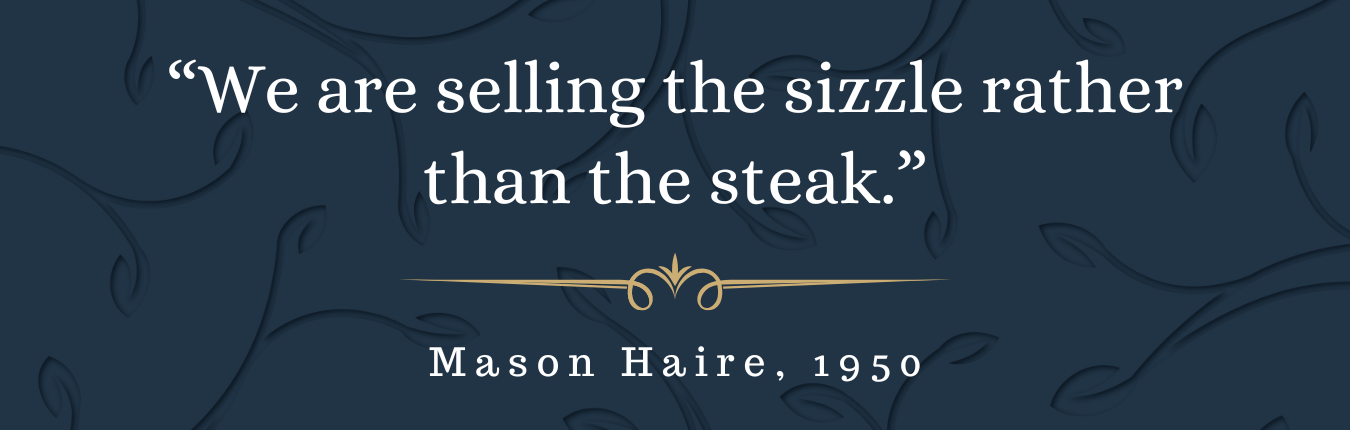
In the post-WWII era, marketers became increasingly interested in the motivations behind consumer behaviour, which led to a surge in research aimed at uncovering the emotional and psychological factors that drive people to make purchases. An example of this research is the study conducted in 1950 by Mason Haire, where participants were shown shopping lists that included either “instant coffee” or “ground coffee.” Those who saw “instant coffee” on the shopping list judged the (hypothetical) shopper as lazy and careless, while those who saw “ground coffee” described the shopper as a responsible homemaker.[4] The issue wasn’t the taste but rather the stigma, showing that buying decisions are often driven by subconscious associations and social judgements, not just product features.
The Digital Age: Data, Personality and Microtargeting (2000s – 2020s)
With the rise of the internet and social media, marketing psychology entered a new era—one driven by data, algorithms, and psychological profiling. Today, your digital footprint (like your Facebook likes) can reveal a lot about you, from your personality traits and age to your political leanings.[5] In 2017, Matz and colleagues demonstrated the power of utilizing people’s digital footprints for psychological microtargeting. They found that ads tailored to a person’s psychological profile—such as targeting introverts differently than extroverts—led to significantly higher engagement and purchase rates.[6]
Further blurring the line between psychology and persuasion is neuromarketing, which is the use of neuroscience to study consumer behaviour. For instance, researchers can examine how consumers’ brains respond to branding, pricing, and advertising stimuli using neuroimaging tools such as fMRI and EEG, as well as physiological measurements (including skin conductance, heart rate, and facial movements).[7] As reported in the Harvard Business Review, studies in this field show that neural activity can predict consumer preferences and even future sales performance.[8] It’s a frontier where psychology, biology, and marketing collide.
From Persuasion to Prediction
The shift from rational product pitches to psychology-driven campaigns marked a seismic shift in advertising. What began as simple product announcements has evolved into sophisticated attempts to tap into our desires and identities. Today, marketing psychology draws from a range of modern theories, including cognitive science, behavioural economics, and even neuroscience. While the ethical implications of such influence remain hotly debated, one thing is clear: understanding the human mind is advertising’s most powerful tool.
Endnotes
[1] Schumann, D. W., Haugtvedt, C. P., & Davidson, E. (2008). History of consumer psychology. Handbook of consumer psychology, 3-28.
[2] Eighmey, J., & Sar, S. (2007). Harlow Gale and the origins of the psychology of advertising. Journal of Advertising, 36(4), 147-158.
[3] Mostegel, I. (2019, February 6). Edward Bernays: The Original Influencer. History Today. https://www.historytoday.com/miscellanies/original-influencer
[4] Haire, M. (1950). Projective techniques in marketing research. Journal of marketing, 14(5), 649-656.
[5] Kosinski, M., Stillwell, D., & Graepel, T. (2013). Private traits and attributes are predictable from digital records of human behavior. Proceedings of the national academy of sciences, 110(15), 5802-5805.
[6] Matz, S. C., Kosinski, M., Nave, G., & Stillwell, D. J. (2017). Psychological targeting as an effective approach to digital mass persuasion. Proceedings of the national academy of sciences, 114(48), 12714-12719.
[7] Harrell, E. (2019, January 23). Neuromarketing: What You Need to Know. Harvard Business Review. https://hbr.org/2019/01/neuromarketing-what-you-need-to-know
[8] Harrell, E. (2019, January 23). Neuromarketing: What You Need to Know. Harvard Business Review. https://hbr.org/2019/01/neuromarketing-what-you-need-to-know
FROM LAUNCH TO LEGACY: GUIDING YOUR FINANCIAL JOURNEY
